Crystal Cavalier for Tribal Council (OBSN)

Candidate for Tribal Council — 2026
Dr. Crystal A. Cavalier-Keck is a citizen of the Occaneechi Band of the Saponi Nation and a former elected Tribal Council member who first took office in 2017. She is seeking election to Tribal Council in 2026 with significantly more experience in organizational leadership, Indigenous law and policy, nonprofit management, government, environmental protection, and community organizing than when she first served.
Crystal's professional career has included service in federal and state government, nonprofit leadership, political organizing, higher education, and Indigenous advocacy. Her earlier professional record documents extensive experience in government regulations, budgeting and financial management, strategic planning, contract negotiations, legislative tracking, operations, and public affairs.
Today, she is the Co-Founder and Executive Director of 7 Directions of Service, an Indigenous-led environmental justice organization working to protect water, land, sacred places, and communities throughout the region.
She is also the Founder and Principal of Arrowhead Strategic Consulting, where she works with nonprofits, Tribal Nations, and community organizations on governance, strategic planning, organizational development, and systems change.

Experience That Can Serve Our Tribe
Crystal brings experience from multiple levels of government and community leadership.
Her career has included work with the U.S. Department of Defense, Department of Homeland Security, General Services Administration, North Carolina Emergency Management, local government, nonprofits, political campaigns, and Native organizations.
Her earlier federal career included advising senior government officials, conducting policy and intelligence analysis, working with congressional and executive-branch offices, managing budgets and resources, and developing organizational strategies.
She also has practical local-government experience. During her work with the City of Fayetteville, she gained experience in planning, human resources, finance, administration, budgeting, community engagement, and developing recommendations for elected officials.
These experiences have taught Crystal that good government requires more than having a title.
It requires planning, transparency, financial responsibility, communication, written policies, accountability, and respect for the people being served.
Education and Leadership Development
- Doctor of Education (Ed.D.) in Organizational Leadership — University of Dayton
- Master of Legal Studies in Indigenous Peoples Law — University of Oklahoma
- Master of Public Administration in Emergency Management — UNC Pembroke
- Bachelor of Arts in Political Science — UNC Greensboro
- Certificate in Legislative Studies — Georgetown University
- Certificate in Intelligence Studies/Counterintelligence — National Intelligence University
Her earlier professional record also reflects extensive training in emergency management, government operations, intelligence analysis, legislative affairs, and organizational management.
But education alone does not make someone a tribal leader.
What matters is how that knowledge is brought home and used for our people.
Returning to Council With a Different Perspective
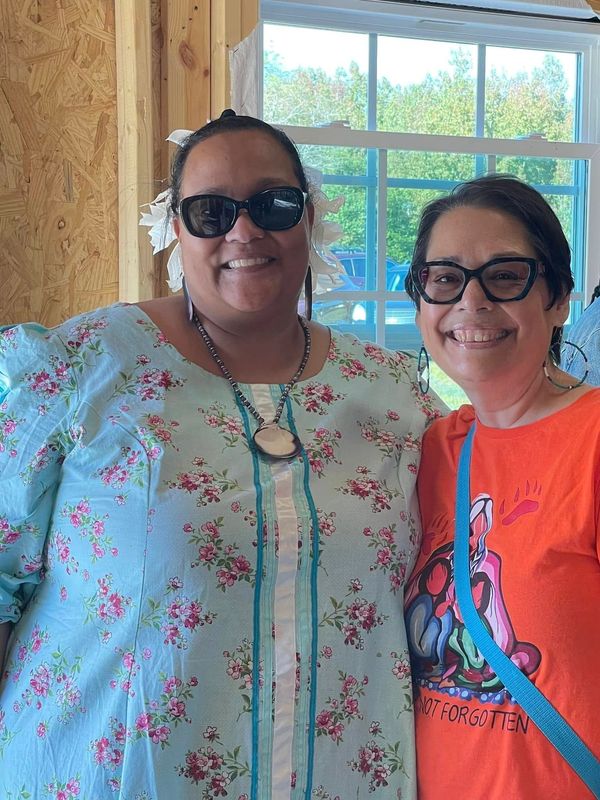
Crystal's Message
When Crystal was elected to Tribal Council in 2017, she entered Council wanting to help establish long-term goals, develop programs, engage tribal citizens, create opportunities for youth, and strengthen the Tribe.
Nearly a decade later, she would return with considerably more experience.
Since that first Council term, Crystal has built organizations, managed staff and budgets, raised substantial funding, worked with attorneys and regulatory agencies, taught college students, organized communities, testified before government bodies, developed public-policy campaigns, and worked with Indigenous leaders throughout North Carolina and nationally.
She has also learned firsthand that tribal government must be strong enough to withstand disagreement.
Crystal believes Council members should be able to ask questions.
Tribal citizens should be able to request information.
Disagreement should not mean disloyalty.
And leadership should never belong to only one person, one family, or one group.
What Crystal Wants to Bring to Tribal Council
Crystal's priorities for Council would center on stronger tribal governance and long-term Nation building, including:
Transparency and Accountability. Tribal members deserve understandable information about Council decisions, finances, programs, grants, policies, and major actions affecting the Nation.
Constitutional Government.
The Tribe's governing documents should mean something. Policies and procedures should be written, consistently applied, and accessible to tribal citizens.
Financial Stewardship. Tribal resources belong to the Nation. Budgets, grants, contracts, expenditures, and long-term financial planning should receive meaningful Council oversight.
Youth and Elders. Our children should grow up knowing who they are, while our elders' knowledge should be recorded, respected, and passed forward.
Land and Cultural Protection. Burial places, historic villages, waterways, traditional landscapes, cultural resources, and ancestral lands deserve long-term protection.
Economic Development. The Tribe should pursue sustainable revenue opportunities, grants, partnerships, workforce development, housing opportunities, and businesses that strengthen tribal independence.
Education and Professional Development. Tribal citizens should be encouraged to pursue appointments, education, professional opportunities, internships, leadership positions, and public service.
Communication With Tribal Citizens. Council should communicate regularly with the membership—not simply when there is an election or controversy.
Building the Next Generation of Leaders.
Leadership should not be threatened by talented tribal citizens. A healthy Nation intentionally develops people who may someday become better leaders than those serving today.
Why Crystal Is Running Again
I first served on Tribal Council in 2017 because I believed in what our Nation could become.
I still believe in that potential.
I have spent the years since my first Council service learning how governments operate, how organizations grow, how funding is secured and managed, how policies are changed, and how communities organize to protect what belongs to them.
I am not running because I believe one person can fix everything. I am running because I believe our people deserve a Tribal Council that works collectively, asks difficult questions, respects our governing documents, communicates with our citizens, protects our resources, and plans beyond the next election.
We cannot change the past, but we can learn from it.
I want us to build a government where disagreement is not treated as disrespect, where our young people see a place for themselves, where our elders know their voices matter, and where every tribal citizen understands that this Nation belongs to all of us.
I am asking for the opportunity to serve our people again—this time bringing nearly a decade of additional leadership, legal, policy, organizational, and community experience back home.
— Dr. Crystal A. Cavalier-Keck
Crystal’s 7 Priorities for the Occaneechi Band of Saponi Nat

1. Transparent & Accountable Tribal Government
Protect Our Constitution & Strengthen Tribal Governance
Create a culture of openness where tribal citizens understand how decisions are made and how tribal resources are used. Crystal will advocate for accessible Council records, regular financial reporting, clear policies, open communication, and meaningful opportunities for citizens to participate and ask questions.
Protect Our Constitution & Strengthen Tribal Governance
Protect Our Constitution & Strengthen Tribal Governance
Our government should be guided by our Constitution, bylaws, policies, and the will of the people—not personalities or personal relationships. Crystal will work to clarify the roles of Tribal Council, administration, committees, and staff while strengthening elections, policies, procedures, and institutional accountability.
3. Restructure Tribal Government to Better Serve Our People
As our Nation grows, our government must grow with it. Crystal wants to move beyond a small administrative structure and begin developing professional departments focused on services for tribal citizens, as funding and capacity allow, including:
Housing & Community Development, Education, Scholarships & Youth, and more!
4. Protect Our Land, Water, Sacred Places & Culture
Protect ancestral lands, burial grounds, historic village sites, waterways, cultural resources, and places important to Occaneechi-Saponi history. Crystal will advocate for land acquisition and return, cultural-resource protection, environmental stewardship, historic preservation, and long-term protection of our homeland.
Crystal’s 7 Priorities cont'
5. Invest in Our Youth, Elders & Families
6. Build Economic Independence & Create Opportunities for Tribal Citizens
6. Build Economic Independence & Create Opportunities for Tribal Citizens
Develop stronger programs that connect generations—from youth leadership, cultural education, mentorship, scholarships, internships, and career opportunities to elder services, oral-history preservation, family support, and opportunities for elders to pass knowledge to younger generations.
6. Build Economic Independence & Create Opportunities for Tribal Citizens
6. Build Economic Independence & Create Opportunities for Tribal Citizens
6. Build Economic Independence & Create Opportunities for Tribal Citizens
Pursue grants, tribal enterprises, workforce development, entrepreneurship, housing opportunities, partnerships, land acquisition, and sustainable revenue. At the same time, create pathways for tribal citizens to work for the Tribe, serve on committees and boards, obtain professional training, and become the Nation's next generation of leaders.
7. Plan for the Next Seven Generations
6. Build Economic Independence & Create Opportunities for Tribal Citizens
7. Plan for the Next Seven Generations
Tribal government should not operate from election to election. Crystal wants the Nation to develop a long-term strategic plan for land, government, culture, economic development, education, infrastructure, citizen services, and financial sustainability.
